
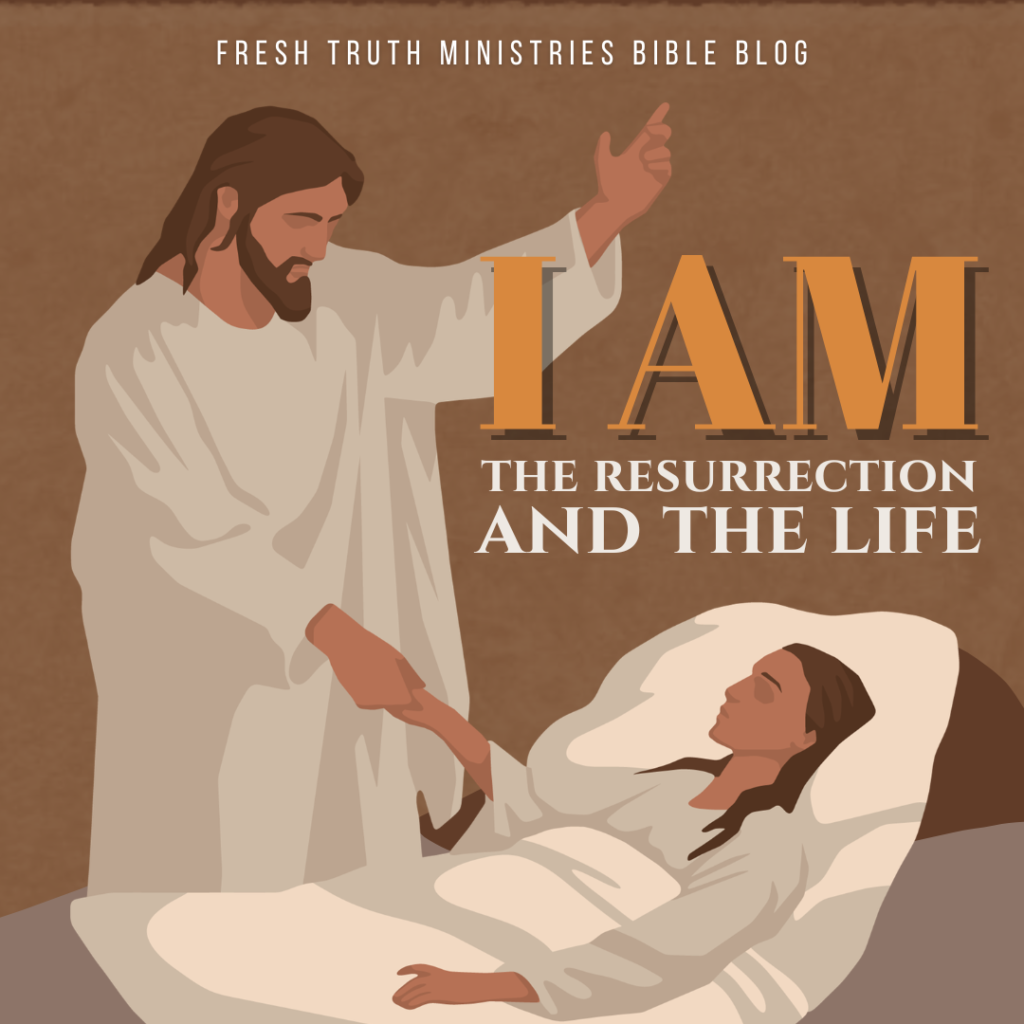
This is the 5th I AM statement made by Jesus as He makes claims to be both the promised Messiah and the God of Israel. The above statement is an extraordinary statement because He claims to have power over death and life. In other words, Jesus is saying He is the Author of Life (Acts 3:15).
This I AM Statement will be broken down into two parts. Part one (discussed today): We want to put a focus on physical death as the statement is made in relation to someone close to Jesus dying. We will look at the term ‘sleep’ in relation to death and what this means for those who trust in Jesus as their Lord and saviour. And then, we will look at what happens after death for both the believer in Christ as well as the unbeliever.
The second part to this article (published in 2 weeks’ time) will breakdown Jesus’s statement I AM the resurrection and the Life and look closer at what He means by this statement.
The story begins with Lazarus of Bethany being sick and a request has been sent out to Jesus by Lazarus sisters, “Lord, behold, he whom You love is sick.” (John 11:3b). Jesus responds purposely by delaying the request to go to Lazarus. “This sickness is not unto death, but for the glory of God, that the Son of God may be glorified through it.” (John 11:4).
This miracle had two key purposes:
1. To bring greater glory to God
2. Jesus knew that this miracle would set the final stage for His death. It would make the religious leaders more determined to kill Him.
His disciples warned Jesus not to go to the region of Judea where Lazarus was because Jews were wanting to stone Him there. But Jesus still goes. I always wondered if Jesus could heal Lazarus from afar and not go to Judea. Knowing Jesus’ divine nature and power, I believe He could do this but the text is silent here. But Jesus went to Judea and followed through with the will of God – to bring greater glory to God and to set the final stage for His death, burial, and resurrection as this would be the last public miracle Jesus performs.
Now we want to look at this term ‘sleep’. The Greek word used for ‘sleep’ in this context is ‘koimao’ and it is used of both natural sleep and of death. When ‘koimao’ is used for death in Scripture, it is only used for the death of the believer in Christ. When Jesus says, “Our friend Lazarus sleeps, but I go that I may wake him up.” (John 11:11b), He uses ‘sleep’ as a metaphor for death. Why? Because just as sleep is temporary for the sleeper, so death is temporary for the one who puts their faith and trust in Jesus Christ.
This miracle of Lazarus being raised from the dead is a great reminder for Christians that though it may be natural to grieve the loss of another believer, we do not need to grieve as non-believers or non-Christians would grieve the death of a person. Because for believers in Christ who have passed away, there is hope that we will see them again, resurrected to life in a glorious body.
Scripture says clearly:
“But now Christ is risen from the dead, and has become the first fruits of those who have fallen asleep.” (1 Cor 15:10)
“But I do not want you to be ignorant, brethren, concerning those who have fallen asleep, lest you sorrow as others who have no hope.” (1 Thess 4:13)
We can be also comforted in Pauls words as He says, “We are confident, yes, well pleased rather to be absent from the body and to be present with the Lord.” (2 Cor 5:8)
We next look at what happens after death. Death is a sensitive subject, and it is only natural that when someone close to us passes away, we use comforting words. There are common phrases like ‘Rest in Peace’ or ‘He or she is in a better place now’ or ‘He or she is no longer in pain’ to explain what happens after death. However, we must not ignore what the Bible teaches. Jesus taught that after death comes two options for everyone. Heaven or Hell. For those who put their trust in Jesus, Heaven is the destination. The soul and spirit of the believer goes immediately to Heaven to be in the presence of the Lord (2 Cor 5:8; John 3:16). For those who die without Christ, Hell is their destination (Matt 25:46). Their soul and spirit go immediately to Hell, a place of torment, and suffering. (John 3:18).
One example where Jesus shares a story of the rich man and Lazarus to show what happens after we die (Luke 16:19-31). Many people think this story to be another parable, but Jesus is using real names (Lazarus and Abraham) therefore this is real.The rich man, who had all he desired in his life lived for himself and did not live a life that honoured God. The fact that he had a poor man at the gate of his house, and he did not help him, even though he had food to spare, shows the heartlessness of this rich man. The other sad part was the rich man knew Lazarus by name. The rich man’s destination after death was Hades where he was in constant torment. Lazarus however, was at peace and in comfort after death. The Bible says,
‘For God so loved the world that He gave His only begotten Son, that whoever believes in Him should not perish but have everlasting life. For God did not send His Son into the world to condemn the world, but that the world through Him might be saved. “He who believes in Him is not condemned; but he who does not believe is condemned already, because he has not believed in the name of the only begotten Son of God.’ (John 3:16-18)
We will conclude part one here for now. Part 2 to this article we will look in deeper to the ‘I AM the resurrection and the life’ statement made by Jesus and break that down further.